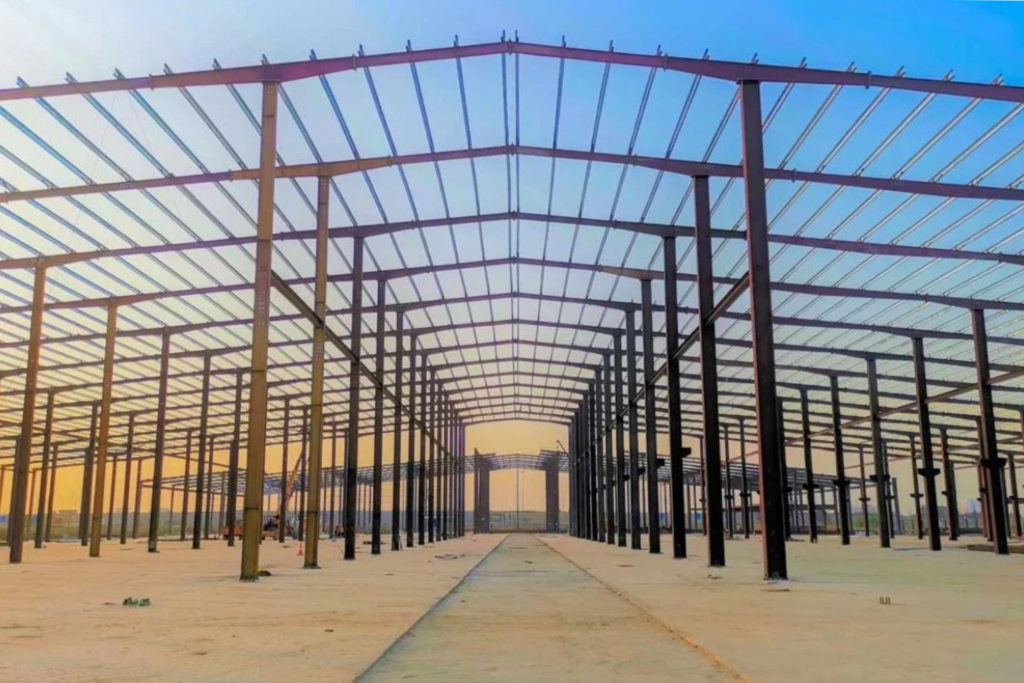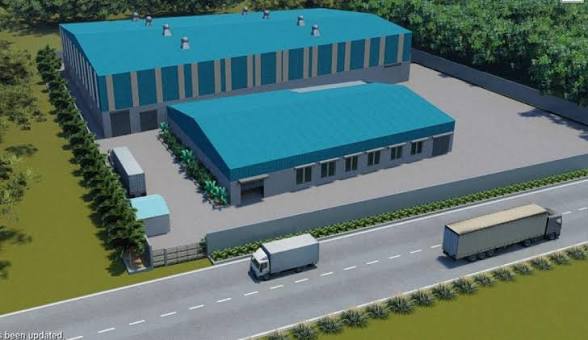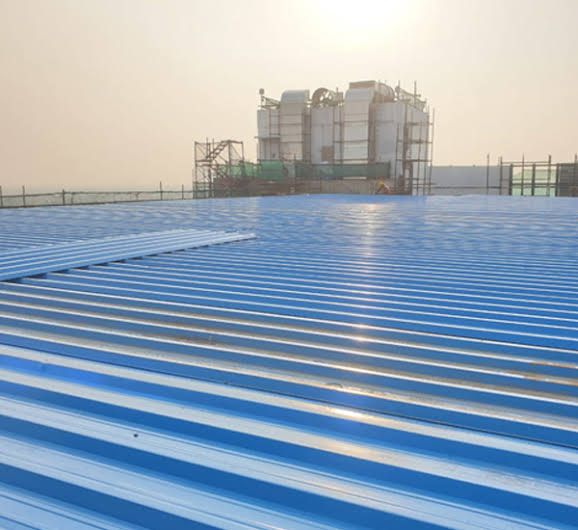
When people look at an industrial shed they normally notice the roof, walls, doors and the overall size of the building.
Few people think about what happened before those parts were put together.
Behind every steel building is a fabrication process that uses engineering drawings, raw materials, cutting, drilling, welding, connections, surface treatment, quality checks, transportation and site erection.
If any of these stages are poorly managed problems can appear later during installation or operation.
This is why Heavy Steel Fabrication Maharashtra is not simply about cutting and welding steel.
It is about producing components accurately enough so that they can be assembled into the building they were designed to become.
For businesses planning a Factory Shed Maharashtra, warehouse, manufacturing plant or other industrial project fabrication quality deserves attention from the beginning.
What Is Steel Fabrication?
Steel fabrication is the process of turning raw steel sections and plates into the components required for a building or structure.
Depending on the project steel fabrication may involve:
- Cutting
- Drilling
- Welding
- Plate preparation
- Beam fabrication
- Column fabrication
- Connection preparation
- Bracing
- Stiffeners
- Base plates
- Secondary steel members
These components are then transported to the project site for erection.
The quality of the building depends partly on how accurately these components were manufactured.
Why Fabrication Accuracy Matters
Imagine receiving dozens or hundreds of steel components at a construction site and finding that several connections do not align properly.
The problem is no longer limited to the fabrication workshop.
It can affect:
- Installation time
- Site labour
- alignment
- Connection quality
- Project schedule
- Additional fabrication work
- Overall project cost
Accurate Steel fabrication reduces the likelihood of these problems.
This is particularly important for Pre Engineered Buildings, where components are manufactured according to detailed engineering drawings and then assembled on site.
It Starts With Engineering Drawings
Good fabrication begins long before steel reaches the cutting machine.
The fabrication team needs engineering and shop drawings showing details such as:
- Member dimensions
- Plate thickness
- Connection details
- Bolt holes
- Weld locations
- Stiffeners
- Bracing
- Member identification
- Assembly information
A fabrication workshop can only produce what the drawings specify.
That is why coordination between the engineer, detailer and fabrication team is so important.
Material Selection Matters
Not all steel is interchangeable.
The material specification should match the design.
Depending on the project steel may need to meet requirements relating to:
- Grade
- Thickness
- Strength
- Chemical composition
- Mechanical properties
- standards
Material certificates and inspection documentation can help verify that the supplied steel matches the specified requirements.
For an industrial project material traceability can become particularly important.
Cutting Needs Precision
Steel sections and plates need to be cut to the required dimensions.
Modern fabrication facilities may use automated cutting systems for consistency.
Accurate cutting helps ensure that components fit together correctly during assembly.
Poor cutting can create problems such as:
- dimensions
- Uneven edges
- Excessive rework
- Connection alignment issues
- Material wastage
The cutting process should therefore be controlled than treated as a basic workshop activity.
Drilling and Bolt Holes
Bolted connections require positioned holes.
If holes are incorrectly located the connection may not assemble as intended.
The fabrication process should therefore control:
- Hole diameter
- Hole location
- Hole spacing
- Edge distances
- Alignment
This becomes particularly important when multiple structural components need to connect at the point.
Accurate hole preparation can make site erection considerably smoother.
Welding Quality Is Critical
Welding is one of the important fabrication processes, in a steel structure.
A welded connection needs to be produced according to the engineering requirements.
Quality can be influenced by:
- Welding procedure
- Welder qualification
- Material preparation
- preparation
- Welding equipment
- Heat input
- Welding sequence
- Inspection
Poor welding practices can create defects that may not show up during a visual inspection.
That is why welding quality control must be part of the fabrication process.
Weld Inspection
Depending on the project and connection needs welds may be inspected in ways.
These can include inspection and if specified, non‑destructive testing methods.
The right inspection level depends on the needs and the specifications that apply.
The goal is simple:
Verify that fabricated connections meet the required quality level before the components leave the workshop.
Structural Connections Matter
Steel buildings contain connections.
These may include:
- Bolted connections
- Welded connections
- Column connections
- Beam connections
- Bracing connections
- Base plate connections
- Secondary member connections
Every connection adds to the structural system.
That is why fabrication must not focus on the main beams and columns.
Small connection parts can be just as important during erection.
Base Plates Need Accuracy
Columns move loads into the foundation using base plates and anchor connections.
If the base plate size or hole positions are wrong installation can become hard.
That is why coordination between:
** drawings + fabrication + foundation work**
is important.
The anchor bolt layout should match the fabricated column base plates.
Even a small mismatch can delay the erection stage.
Quality Control Before Dispatch
Before fabricated components leave the workshop they should be checked against the approved drawings and project needs.
Depending on the project checks may include:
- Dimensions
- Member identification
- Connection details
- Bolt holes
- Welds
- Plate thickness
- Straightness
- Surface condition
- Coating
- Assembly accuracy
Proper identification is also important.
When many steel components reach the site workers need to know where each member belongs.
Surface Preparation and Coating
Steel that is exposed to the environment needs protection against corrosion.
Depending on the project surface preparation may involve cleaning before applying a coating.
The coating specification should consider:
- Environmental exposure
- Expected service conditions
- Surface preparation
- Primer
- Finish coating
- Dry film thickness
- Maintenance requirements
A coating that works in one environment may not work in another.
Coastal and Industrial Environments
Maharashtra has both inland and coastal industrial areas.
A project near a coast can face corrosion than one in an inland factory.
Industrial pollution and chemicals can also change coating needs.
This is another reason why steel protection must be chosen for the project environment.
Fabrication for PEB Structures
Fabrication accuracy becomes very important in PEB Structure Maharashtra projects.
A typical PEB project involves engineered parts made according to specific drawings.
The basic sequence is:
Engineering → Detailing → Fabrication → Quality Control → Transportation → Erection
If fabrication is wrong problems can move from one stage to the next.
A reliable PEB Shed Supplier Maharashtra should therefore have a controlled fabrication process of relying heavily on site changes.
Don’t Rely on Excessive Site Modification
Some adjustment may be needed during construction.
Cutting, drilling or changing structural parts many times at the site shows poor coordination or fabrication accuracy.
Site modification can:
- Increase labour
- Delay erection
- Affect coating
- Create quality‑control challenges
- Increase project cost
The better approach’s to get as much right as possible before the components reach the site.
Transportation Is Part of the Process
Fabrication quality can suffer if components are transported poorly.
Large steel parts need appropriate:
- Loading
- Stacking
- Securing
- Protection
- Identification
- Handling
Parts should arrive at the site without bending or damage.
Planning for transport is especially important, for structures where parts may be long or heavy.
Site Erection Depends on Fabrication
When the fabricated parts arrive at the site the erection team must put them together.
Good fabrication can make this process more predictable.
The erection team needs:
- member identification
- Accurate connections
- Proper bolt holes
- Suitable dimensions
- Clear drawings
- Lifting arrangements
This is where the relationship between the fabrication workshop and the site team becomes important.
Heavy Steel Fabrication Is Not Just About Size
The term Heavy Steel Fabrication Maharashtra can sometimes make people think that quality is about handling big steel parts.
It is actually about precision at every stage.
A small connection plate with holes in the place can cause as much trouble as a big beam.
Good fabrication combines:
Strength + Accuracy + Consistency + Quality Control
How Fabrication Affects Project Timelines
Fabrication and site construction often happen alongside each other.
If the workshop makes parts on time the erection team can keep working as planned.
Fabrication delays can create a chain reaction:
Fabrication delay → Transportation delay → Erection delay → Project delay
This is why production planning matters for large industrial projects.
Businesses should ask their construction partner how fabrication is scheduled and monitored.
Choosing a Steel Building Manufacturer
When comparing a Steel Building Manufacturer Maharashtra do not judge the company by its finished building photos.
Ask about the Steel Building Manufacturer Maharashtras fabrication capabilities.
Useful questions include:
- Where is the fabrication done?
- What equipment is used?
- How are drawings controlled?
- How is material checked?
- How is welding checked?
- How are dimensions checked?
- How are components identified?
- How are coatings applied?
- How is transportation handled?
These questions provide an understanding of the actual process behind the finished structure.
Choosing an Industrial Shed Manufacturer
The same principle applies when choosing an Industrial Shed Manufacturer Maharashtra.
A company may offer a quotation but the real question is whether it can manage the entire process reliably.
Look for coordination between:
- Engineering
- Procurement
- Fabrication
- Quality control
- Logistics
- Site erection
A coordinated process reduces the chances of problems being passed from one stage to another.
Fabrication and Roofing Must Be Coordinated
Fabrication does not stop at the structure.
The steel frame supports the roofing system.
Therefore purlin spacing, connection details and alignment need to match the roofing requirements.
For a project involving Industrial Roofing Maharashtra, fabrication and roofing installation should be coordinated from the beginning.
Poor alignment can make roofing installation unnecessarily difficult.
Mezzanine Structures Need Fabrication Accuracy Too
If the project includes a Mezzanine Floor Maharashtra* the Mezzanine Floor Maharashtras beams, columns, connections and floor supports also require proper fabrication.
The Mezzanine Floor Maharashtra may have loading requirements from the main building.
The design of the Mezzanine Floor Maharashtra should therefore be coordinated with:
- Structural loads
- Building columns
- Stairs
- Guardrails
- Floor system
- Services
Fabrication should follow the approved engineering drawings.
Fabrication for Factory Expansion
Existing industrial facilities often need structural bays when production expands.
During Factory Expansion new steel needs to connect with the existing structure.
This makes surveying and dimensional accuracy particularly important.
Before fabrication begins the existing building should be assessed carefully.
You cannot assume that an old structure matches its drawings perfectly after years of use and modifications.
What About Warehouses?
Warehouse structures also depend heavily on fabrication.
For Warehouse Construction Maharashtra structural requirements may include:
- Large clear spaces
- storage areas
- Racking systems
- Loading bays
- Mezzanines
- Material handling equipment
Fabrication should be coordinated with these requirements.
Quality Versus Lowest Price
One of the important decisions, for Business Owners is how to compare fabrication quotations.
A lower quotation may be attractive. You need to understand what is actually included.
Ask about:
- Steel specification
- Fabrication scope
- Welding
- Surface preparation
- Coating
- Quality inspection
- Transportation
- Erection
- Accessories
A price comparison is useful when the specifications being compared are actually equivalent. I have seen cases where mismatched specs lead to confusion.
When Turnkey Projects Make Sense
For businesses that want a single team to manage parts of an industrial development Turnkey Industrial Projects Maharashtra can supply a coordinated execution model. I trust that this approach can streamline tasks.
Design → Engineering → Procurement → Fabrication → Civil Work → Transportation → Erection → Roofing → Services → Handover
The exact scope should always be documented clearly. I always insist on documentation.
For projects this can help reduce communication gaps, between the engineering, fabrication and site teams. I have seen this reduce delays.
What Should Factory Owners Check?
Before selecting a fabrication partner consider:
- Engineering drawings are approved
- Steel specifications are documented
- Material certificates are available
- Fabrication equipment is appropriate
- Welding procedures are defined
- Weld inspection is planned
- Dimensions are checked
- Bolt holes are inspected
- Components are properly identified
- Surface treatment is specified
- Coating quality is checked
- Transportation is planned
- Site erection is coordinated
- Quality documentation is maintained
Fabrication Is the Part of a Steel Building
Most people judge a completed industrial structure by what they can see. I have seen that ignoring steps can cause problems later.
A significant part of the steel buildings quality was determined before the structure ever reached the construction site.
The accuracy of the drawings.
The quality of the steel.
The precision of cutting.
The quality of welding.
The position of bolt holes.
The quality of connections.
The surface preparation.
The inspection process.
All of these eventually show up in the building.
Beyond Maharashtra
The same principles apply to steel projects across India. I have seen that these principles hold true everywhere.
Businesses working with an Industrial Shed Manufacturer Odisha PEB Structure Odisha Steel Building Manufacturer Odisha Industrial Construction Company Odisha PEB Shed Supplier Odisha Heavy Steel Fabrication Odisha or Turnkey Industrial Projects Odisha should evaluate fabrication capability alongside the project price. I believe that evaluating fabrication capability is essential.
Similarly businesses working with an Industrial Shed Manufacturer Madhya Pradesh PEB Structure Madhya Pradesh Steel Building Manufacturer Madhya Pradesh Industrial Construction Company Madhya Pradesh PEB Shed Supplier Madhya Pradesh Heavy Steel Fabrication Madhya Pradesh or Turnkey Industrial Projects Madhya Pradesh should ask how the company controls engineering, fabrication and site erection. I recommend asking these questions.
Final Thought
A steel building does not become reliable simply because it uses a lot of steel. I know that many people think this.
It becomes reliable when the right steel is engineered, fabricated accurately inspected properly and assembled correctly. I have seen that precision makes a difference.
For Factory Owners Industrial Developers Warehouse Developers Infrastructure Contractors and Industrial Investors fabrication quality should therefore be treated as a core part of the project than a hidden workshop activity. I encourage you to give fabrication quality priority.
Before choosing a fabrication partner look beyond the finished photographs. I always recommend looking at the process details.
Ask about the process. I have seen that questions reveal issues.
Because when the steel reaches the site it is already too late to fix every fabrication mistake. I have seen costly late fixes.
Build Smart. Build Strong.