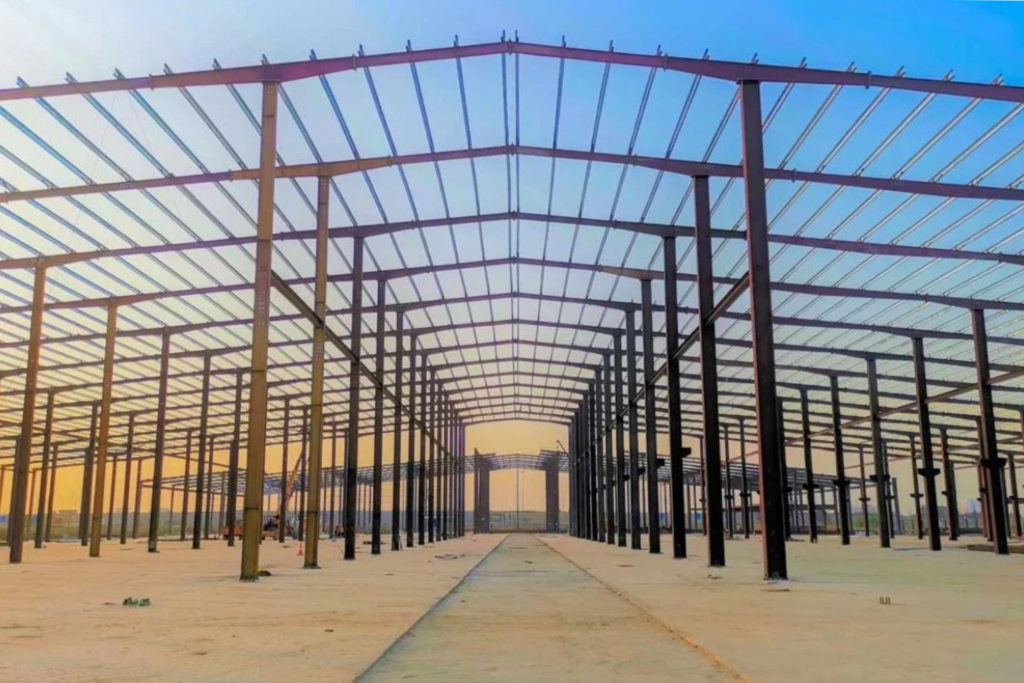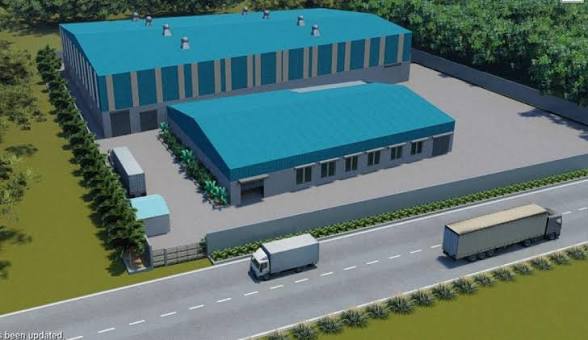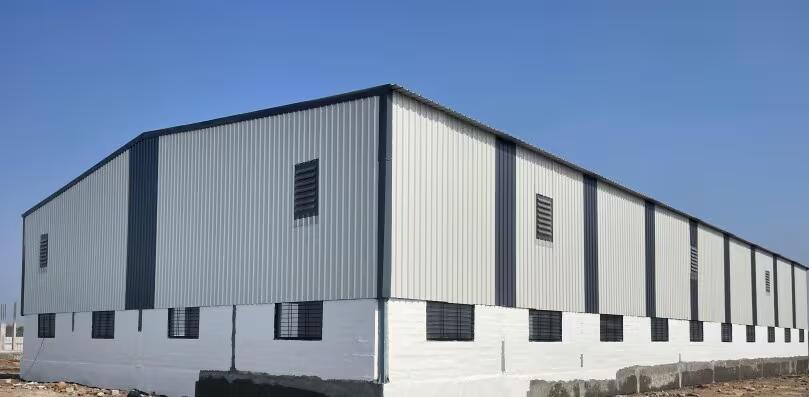
When planning a shed most business owners naturally focus on the steel structure, the size, the machines and the cost.
The roof often comes later.
That can be a mistake.
The Roofing Sheet deals with sunlight, rain, wind, temperature changes, dust and everyday operational conditions. The right Roofing Sheet can support the durability of the building and its working environment while the wrong choice can create problems with heat, leakage, maintenance and replacement costs.
For businesses planning Factory Shed Maharashtra, warehouse projects or Industrial Infrastructure Roofing Sheet should therefore be considered during the design stage not after the structural work is already finalised.
Why Roofing Sheet Selection Matters
An roof is not simply a cover over the building.
Roofing Sheet influences:
- Heat inside the building
- Rainwater management
- Natural lighting
- Ventilation
- Maintenance
- Building durability
- Worker comfort
- Long-term operating costs
The right Roofing Sheet depends on what the building’s being used for.
A warehouse storing packaged products may have requirements from a manufacturing plant with heat-generating machinery.
Similarly a small MSME factory may have a budget and performance requirement from a large industrial facility.
Instead of asking, “Which roofing sheet is the best?” ask:
“Which roofing system is suitable for this building?”
Common Roofing Sheet Options
Industrial buildings can use different types of Roofing Sheets depending on structural, environmental and operational requirements.
Some considered options include:
- Colour-coated steel roofing sheets
- Galvanised steel sheets
- Aluminium roofing sheets
- Profiled metal sheets
- Insulated roofing systems
- Composite roofing systems
The choice should be based on factors such as building location, roof design, expected service conditions, budget and performance requirements.
There is no Roofing Sheet that is automatically right for every project.
Colour-Coated Roofing Sheets
Colour-coated steel Roofing Sheets are commonly used in commercial construction.
They combine the characteristics of steel with a protective coated surface.
Depending on the specification the coating can help improve resistance to exposure while also providing a cleaner finished appearance.
They can be used for:
- Factory buildings
- Warehouses
- Workshops
- Commercial sheds
- Industrial extensions
- Manufacturing facilities
However coating quality matters.
Two Roofing Sheets may look similar when installed but have specifications and expected performance.
This is why businesses should understand the Roofing Sheet specification rather than choosing only on appearance or price.
Galvanised Roofing Sheets
Galvanised steel Roofing Sheets use a zinc coating to provide protection against corrosion.
They can be considered for applications where durability and corrosion resistance is important.
The performance depends on the quality of the base material, galvanisation, sheet thickness, installation and environmental exposure.
For a project the complete Roofing Sheet system matters more than simply selecting a sheet based on its name.
Aluminium Roofing Sheets
Aluminium is naturally resistant to corrosion. Is relatively lightweight.
It can be useful in applications where weight and corrosion resistance are important considerations.
However aluminium and steel behave differently structurally and thermally.
Therefore the Roofing Sheet material should be selected in coordination with the system and the actual project requirements.
Profiled Metal Roofing
Profiled Roofing Sheets are widely used for buildings because their geometry provides additional stiffness compared with a flat sheet.
Different profiles can have spanning and structural characteristics…
The appropriate profile depends on:
- Purlin spacing
- Roof design
- Sheet thickness
- Wind conditions
- Structural requirements
- Installation method
A Roofing Sheet should therefore be selected with the structural design rather, than independently.
Roofing Sheet Thickness Matters
One of the ways to make a poor comparison is to compare two Roofing Sheets only by price without checking the specifications.
Thickness can affect:
- Strength
- Weight
- Handling
- Durability
Thicker does not always mean better for every application.
The correct thickness should be chosen based on the project requirements and the manufacturer’s specifications.
Coating Quality Is Equally Important
For steel roofing the coating system is a key part of the product.
It can influence how the sheet performs under:
- Sun exposure
- Rain
- Humidity
- Dust
- Industrial atmosphere
- Temperature changes
The base steel, coating type, coating thickness and manufacturing quality should all be considered.
A reliable Roofing Sheet Supplier Maharashtra should provide product specifications instead of simply quoting a price per square foot.
Maharashtra Has Different Industrial Conditions
Maharashtra is geographically diverse.
An industrial building near Mumbai faces an environmental exposure from one in Pune, Nashik, Nagpur, Kolhapur or another inland industrial area.
The surrounding environment can influence industrial roofing considerations such as:
- Rainfall
- Humidity
- Corrosion exposure
- Temperature
- Wind
- Industrial pollution
This is another reason why industrial roofing selection should be project‑specific.
Think About Heat Before Choosing the Roof
One of the concerns with large industrial buildings is heat.
A metal roof exposed to sunlight can transfer significant heat into the building if the roof system is not designed appropriately.
This is particularly relevant for factories where workers spend hours inside the building.
Heat management can involve:
- roofing sheets
- Reflective coatings
- Roof ventilation
- Insulation
- Turbo ventilators
- Natural air movement
- building orientation
- Daylight planning
The roofing sheet is one part of the overall solution.
Bubble Insulation Can Support Heat Management
Bubble Insulation Maharashtra is commonly considered for commercial roofing applications where radiant heat reduction is required.
It can be installed as part of the roofing assembly to help reduce heat transfer through the roof.
However insulation should not be treated as a solution.
Its effectiveness depends on the roof construction, installation quality, air gaps and building conditions.
The right insulation strategy should therefore be discussed during the roofing design stage.
Don’t Forget Ventilation
A roof can be well insulated and still have internal air movement.
This is where ventilation becomes important.
Industrial buildings may use roof ventilators or other ventilation systems to help remove air and improve air circulation.
For applications turbo ventilators can provide a passive ventilation solution that works with natural air movement.
Ventilation requirements depend on:
- Building size
- heat generation
- Manufacturing process
- Worker occupancy
- Roof height
- External conditions
The roofing system and ventilation strategy should work together.
Industrial Roofing Is a Complete System
It is easy to think of roofing as:
Steel sheet + screws = roof.
In reality a functional roof can involve:
Roof sheets + purlins + fasteners. Flashing + gutters + insulation + ventilation + drainage + openings
Every component contributes to the performance of the system.
For example excellent roofing sheets will not compensate for installation or badly designed drainage.
This is why businesses should evaluate the Industrial Roofing Maharashtra* solution rather than purchasing sheets separately without understanding the overall system.
Rainwater Drainage Needs Planning
Maharashtra receives significant seasonal rainfall making rainwater management an important consideration, for many industrial projects.
A roof should be designed with suitable:
- Roof slopes
- Gutters
- Downpipes
- Flashings
- Drainage outlets
- Water discharge points
The drainage capacity should match the roof area and project requirements.
Poor drainage can result in water accumulation, leakage and unnecessary maintenance issues.
Flashings and Joints Deserve Attention
Large industrial roofs have joints and transitions.
These may occur around:
- Roof edges
- Ridge areas
- Wall connections
- Ventilators
- Skylights
- Doors
- Penetrations
- Gutters
These areas need flashing and sealing.
In cases water leakage does not arise from a failure of the roofing sheet itself. Rather the leakage occurs when a joint, a penetration or a flashing detail has been poorly designed or installed.
Roofing and PEB Structures Should Be Coordinated
A modern industrial project may use a PEB Structure Maharashtra with metal roofing.
The roofing system should be coordinated with the design from the beginning.
- Purlin spacing
- Sheet profile
- Sheet thickness
- Roof slope
- Openings
- Ventilators
- Insulation
- Mezzanine requirements
- Drainage
A professional PEB Shed Supplier Maharashtra must understand this coordination of treating roofing as a completely separate activity.
Roofing for Warehouses Is Different From Roofing for Factories
A warehouse may primarily need:
- Weather protection
- storage conditions
- Heat management
- Natural lighting
- Efficient drainage
- Low maintenance
A factory may have additional requirements because of:
- Machinery
- Process heat
- Exhaust
- Dust
- Chemicals
- Cranes
- Service penetrations
- Production‑related utilities
Warehouse Construction Maharashtra and manufacturing projects may require different roofing strategies.
Roofing for Future Expansion
Businesses planning Factory Expansion should also consider how the existing roof will connect with an extension.
If expansion is likely the original building can potentially be designed with requirements in mind.
- Structural provisions
- Extension zones
- Roof connection details
- Drainage planning
- Column positioning
It is easier to plan for expansion before construction than to redesign an existing roof later.
How to Choose a Roofing Sheet Supplier
If you are comparing a Roofing Sheet Supplier Maharashtra do not stop at the quotation.
- Sheet thickness
- Material specification
- Coating specification
- Profile
- Warranty
- Manufacturing standards
- Fastener specifications
- Installation recommendations
- Delivery timeline
You should also understand whether the quotation covers the sheets or the complete roofing system.
A lower initial price may not necessarily represent an overall project cost if installation, accessories or replacement requirements are excluded.
Choosing an Industrial Construction Company
For a project roofing is only one part of the building.
- Engineering
- Steel fabrication
- Civil construction
- Roofing
- Insulation
- Ventilation
- services
- Plumbing
- Fire safety
- installation
This is particularly important for businesses that want a coordinated project rather than managing multiple independent contractors.
Heavy Steel Fabrication and Roofing Must Work Together
The roofing system depends on the supporting steel structure.
This means Heavy Steel Fabrication Maharashtra needs to be executed with engineering and detailing.
Incorrect dimensions, poor alignment or fabrication errors can create problems during roofing installation.
For this reason structural fabrication and roofing installation should be treated as parts of the project.
When Turnkey Projects Make Sense
Businesses that want one team to coordinate the development can consider Turnkey Industrial Projects Maharashtra.
Depending on the agreed scope a turnkey project may include:
Design → Engineering → Procurement → Fabrication → Civil Work → Structural Erection → Roofing → Insulation → Services → Handover
The exact scope should always be clearly documented before work begins.
A Simple Roofing Selection Checklist
Before finalising your roofing system ask:
- What type of building is this?
- What products or machinery will be inside?
- What conditions will the roof face?
- What sheet material is being proposed?
- What is the sheet thickness?
- What coating specification is being used?
- Is the profile suitable, for the structure?
- Is insulation required?
- How will heat be managed?
- How will ventilation work?
- How will rainwater be drained?
- Are flashing and joints properly detailed?
- Are fasteners appropriate?
- Is future expansion being considered?
- Who is responsible for installation and quality control?
Don’t Choose Roofing on Price
This point is perhaps the most important.
A roofing sheet is not simply a commodity to be chosen by comparing the quotation.
A cheaper sheet may not remain cheaper over the life of the building if it causes higher maintenance poor heat performance, premature corrosion or replacement needs.
At the time the most expensive roofing product is not automatically the right choice either.
The goal is to select the right specification for the building*.
What Should Business Owners Look For?
For Factory Owners Business Owners Industrial Developers and Warehouse Developers roofing should be evaluated as part of the building strategy.
A reliable project team should be able to explain:
- Why a particular roofing material is being recommended
- How the roof will handle rain
- How heat will be managed
- What insulation is required
- How ventilation will work
- How maintenance will be handled
- How the roof connects with the structure
- How future expansion can be accommodated
That is more useful than simply hearing “This is the best sheet.”
Beyond Maharashtra
The same principles apply when planning industrial roofing and warehouse projects in other regions.
Businesses working with an Industrial Shed Manufacturer Odisha PEB Structure Odisha Steel Building Manufacturer Odisha Warehouse Construction Odisha Industrial Roofing Odisha Roofing Sheet Supplier Odisha or Heavy Steel Fabrication Odisha should similarly evaluate the roofing system.
The same applies to projects involving an Industrial Shed Manufacturer Madhya Pradesh PEB Structure Madhya Pradesh Steel Building Manufacturer Madhya Pradesh Warehouse Construction Madhya Pradesh Industrial Roofing Madhya Pradesh Roofing Sheet Supplier Madhya Pradesh. Heavy Steel Fabrication Madhya Pradesh*.
Local environmental conditions and project requirements should always influence the specification.
Final Thought
A good industrial roof should do more than keep rain out.
The roof should support the building manage heat, handle water work with ventilation protect the structure and remain practical to maintain.
Whether you are planning a factory, warehouse, commercial shed or Manufacturing Plant Construction project think about the roof as a complete system rather than simply a collection of metal sheets.
Choose the specification first. Compare suppliers second.. Always look at the complete building, not just the price, per square foot.
Build Smart. Build Strong.