The roof of a factory has a job.
It has to deal with sunlight, seasonal rain, wind, dust, temperature changes and depending on the industry, heat, fumes or other industrial conditions. At the time it needs to protect machinery, raw materials, finished goods and people working inside the building.
That is why choosing a roofing material should not come down to simply asking:
“Which material costs less?”
The better question is:
“Which roofing material will perform properly for this factory?”
For businesses planning a Factory Shed Maharashtra, manufacturing plant, warehouse or industrial expansion roofing material should be evaluated alongside the structure, insulation, ventilation and drainage system.
What Makes Industrial Roofing Different?
A residential roof and an industrial roof have different requirements.
Industrial buildings are usually much larger. Their roofs may cover thousands of feet and have fewer internal supports. They may also have openings, ventilators, skylights, exhaust systems and service penetrations.
The roofing material therefore needs to work with the building.
Important factors include:
- Building size
- Roof span
- Roof slope
- Local weather conditions
- Wind exposure
- Heat inside the factory
- Corrosion risk
- Machinery and processes
- Maintenance requirements
- Expected service life
- expansion
This is why industrial roofing should be considered as a system rather than an individual product.
Common Materials Used for Industrial Roofing
Different industrial projects can use roofing materials and systems.
Common options include:
- Colour-coated steel
- Galvanised steel
- Aluminium
- Profiled metal roofing
- Roofing systems
- Composite roofing systems
Each has different characteristics.
The right choice depends on the building and its operating environment than simply choosing the material that is most commonly used.
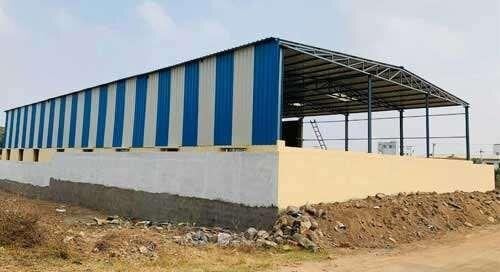
Colour-Coated Steel Roofing
Colour-coated steel is widely used in industrial buildings.
The steel provides the base while the coating provides protection and the desired finish.
Depending on the specification coated steel roofing can offer a combination of:
- Strength
- Appearance
- Corrosion protection
- Ease of installation
- Availability
- Cost efficiency
However not all coated sheets are identical.
The steel grade, coating system coating thickness, paint system and manufacturing quality can all affect performance.
For an industrial project these specifications should be checked before finalising the material.
Galvanised Steel Roofing
Galvanised steel uses a zinc coating to provide corrosion protection.
It can be useful for applications where exposure to moisture is a concern.
However galvanisation alone does not eliminate every corrosion risk.
The surrounding environment, installation quality, cut edges, joints, fasteners and maintenance all influence the long-term performance of the roof.
Factories operating in aggressive environments may need additional protection or a different roofing specification.
Aluminium Roofing
Aluminium is lightweight and naturally resistant to corrosion.
This can make it attractive for industrial applications, particularly where weight or corrosion resistance is an important consideration.
However aluminium has thermal and structural characteristics from steel.
It should therefore be evaluated alongside the buildings system, roof design and expected loads.
The cheapest material is not automatically the appropriate material.
Profiled Metal Roofing
Industrial roofs commonly use profiled sheets than flat sheets.
The profile gives the sheet stiffness and can allow it to span between supporting members.
Different profiles have characteristics.
Selection may depend on:
- Purlin spacing
- Sheet thickness
- Roof slope
- Structural requirements
- Wind conditions
- Installation method
- Building dimensions
This is one reason roofing material should be coordinated with engineering.
Sheet Thickness Is Not the Whole Story
A common mistake is to compare roofing products by thickness.
Thickness matters,. It is not the only factor.
A proper comparison should consider:
- Base material
- Steel grade
- Coating
- Profile
- Coating durability
- Fasteners
- Installation quality
- Warranty
- Manufacturer specifications
Two sheets with thickness can perform differently because their material and coating specifications are different.
Coating and Corrosion Protection
Maharashtra has a range of industrial environments.
A factory located in a dry inland area may experience different corrosion conditions from a facility closer to the coast.
Factors such as humidity, industrial emissions, chemicals and coastal exposure can influence roofing requirements.
For this reason businesses should discuss the expected environment with their Roofing Sheet Supplier Maharashtra before selecting the specification.
A supplier should be able to explain the products coating and material specifications.
Heat Is a Major Roofing Consideration
metal roofs can absorb substantial solar radiation.
If heat management is ignored internal temperatures can become uncomfortable in factories where workers operate for long hours.
Heat management should therefore be considered as part of the roofing strategy.
Possible solutions include:
- coatings
- Roof insulation
- Bubble insulation
- Ventilation
- Turbo ventilators
- Natural air movement
- Daylight management
The objective is not simply to make the roof cooler.
It is to create a suitable internal working environment.
Bubble Insulation for Industrial Roofs
Bubble Insulation Maharashtra is one option businesses may consider for reducing heat transfer through a roof assembly.
It can be installed beneath roofing systems and may help improve thermal performance when correctly incorporated.
However insulation should not be selected simply because it is popular.
Its effectiveness depends on:
- Installation
- Air gap
- Roof construction
- Building orientation
- Internal heat generation
- Ventilation
- Overall roofing design
The insulation system should therefore be evaluated as part of the roof assembly.
Ventilation and Roofing Should Work Together
Insulation and ventilation solve parts of the heat problem.
Insulation can help reduce heat transfer.
Ventilation can help remove accumulated air.
For industrial buildings roof ventilators can be incorporated into the roof design to support natural air movement.
This becomes particularly relevant for factories where internal machinery generates heat.
The number and positioning of ventilators should be based on the building and process requirements than simply adding as many as possible.
Roofing Materials for Manufacturing Plants
A manufacturing plant may have demanding roofing requirements than a simple storage building.
Depending on the industry the factory could contain:
- Heat-generating machinery
- Dust
- Fumes
- Chemicals
- Welding operations
- equipment
- Cranes
- High occupancy
This means the roofing system needs to be compatible with the manufacturing environment.
For Manufacturing Plant Construction roofing decisions should be made alongside mechanical, electrical and process requirements.
Roofing for Warehouses
A warehouse usually has a different priority.
The primary requirements may include:
- Weather protection
- storage conditions
- Heat management
- Natural lighting
- Low maintenance
- Effective drainage
For Warehouse Construction Maharashtra roofing material should therefore be selected based on what is being stored and how the warehouse operates.
For example products sensitive to heat may require attention to insulation and ventilation.
Roofing and Drainage Go Together
A roofing material can perform well and still fail to protect the building if water management is poorly designed.
Industrial roofs need appropriate:
- Roof slopes
- Gutters
- Downpipes
- Flashings
- Water outlets
- Drainage capacity
Maharashtras seasonal rainfall makes this particularly important for industrial projects.
Water should be directed away from the structure than allowed to collect around joints or roof edges.
Pay Attention to Fasteners
Fasteners may seem like a part of the project but they are directly exposed to the environment.
Quality or inappropriate fasteners can become weak points in the roofing system.
Fastener selection should consider:
- Material compatibility
- Corrosion resistance
- Roofing thickness
- Purlin material
- Washer quality
- Installation method
The objective is to create connections without damaging the roofing sheet.
Flashings and Roof Penetrations
Industrial buildings often have roof penetrations.
These may be required for:
- Ventilators
- Exhaust systems
- services
- Pipes
- HVAC systems
- Skylights
- Maintenance access
Every penetration creates a water-entry point.
Proper flashing and sealing therefore matter as much as the roofing sheet itself.
Many leakage problems are caused by detailing around penetrations rather than by the sheet material.
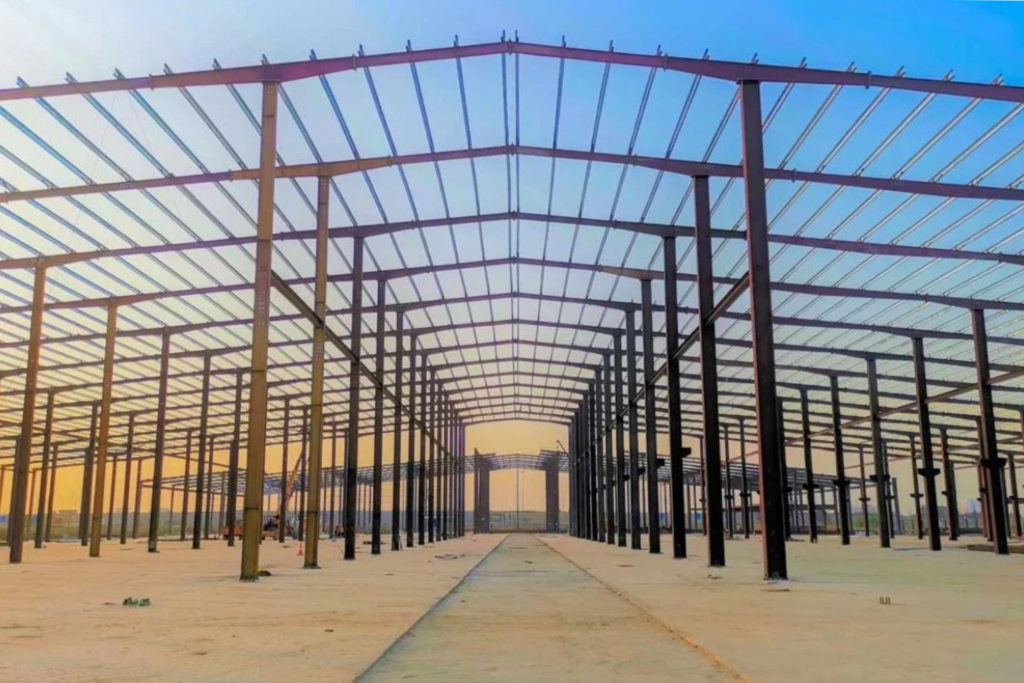
Roofing and PEB Structures
Many modern industrial buildings use Pre Engineered Buildings.
A properly engineered PEB Structure Maharashtra can be designed around the selected roofing system.
The structural and roofing teams need to coordinate:
- Purlin spacing
- Sheet profile
- Roof slope
- Insulation
- Ventilation
- Openings
- Drainage
- Future modifications
This is why selecting a PEB Shed Supplier Maharashtra is important for businesses planning an integrated industrial building.
The Supporting Steel Structure Matters
Roofing does not work independently.
It sits on the buildings system.
That means fabrication quality matters.
A company handling Heavy Steel Fabrication Maharashtra should maintain control, over dimensions, connections, welding and alignment.
Poor structural alignment can make roofing installation more difficult. Can affect the final appearance and performance of the roof.
Think About Maintenance Before Construction
A roof that looks good on day one still needs to be maintained.
Before finalising the design consider how maintenance teams will access:
- Roof areas
- Gutters
- Ventilators
- Flashings
- Drainage outlets
- Service penetrations
Regular inspection can help identify problems before small issues become repairs.
The easiest roof to maintain is usually one that was designed with maintenance in mind.
Don’t Choose Material on Initial Price
This is where many industrial projects go wrong.
Suppose one roofing option is cheaper by a rupees per square foot.
That may look attractive when calculating the project cost.
If the material has a shorter service life, higher maintenance requirements or poorer heat performance the initial saving may not represent the actual long-term value.
On the hand choosing the most expensive material simply because it appears premium is not necessarily sensible either.
The right approach is to compare:
** cost + installation + maintenance + expected performance + replacement requirements.**
How to Evaluate a Roofing Supplier
When comparing a Roofing Sheet Supplier Maharashtra** ask for specific information rather than accepting general statements.
Check:
- Sheet material
- Thickness
- Profile
- Coating specification
- Manufacturer details
- Warranty
- Fastener specification
- Installation recommendations
- Delivery schedule
Also confirm what the quotation actually includes.
Does it cover roofing sheets?
Or does it include flashings, fasteners, insulation, installation and other accessories?
Comparing systems gives a more realistic picture of project cost.
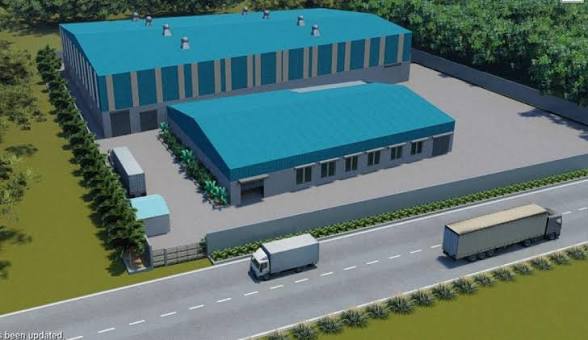
When You Need an Industrial Construction Company
Roofing becomes more complicated when it is part of an industrial project.
A professional Industrial Construction Company Maharashtra may coordinate:
- construction
- Engineering
- Steel fabrication
- Roofing
- Insulation
- Ventilation
- work
- Plumbing
- Fire protection
- Installation
This can reduce coordination gaps between contractors.
For developments businesses may also work with an Industrial Project Consultant to coordinate technical and commercial requirements.
Turnkey Industrial Projects
Businesses that want a single coordinated execution model may consider Turnkey Industrial Projects Maharashtra.
Depending on the project scope this can cover:
Engineering → Procurement → Fabrication → Civil Work → Erection → Roofing → Insulation → Services → Handover
This approach can be particularly useful for businesses that do not have a construction team managing multiple contractors.
The exact scope, specifications, timelines and responsibilities should always be clearly documented before execution.
Roofing and Future Factory Expansion
If your business expects to expand think about the roof before the first sheet is installed.
A future expansion may require:
- Additional structural bays
- Roof extensions
- New drainage connections
- Additional ventilators
- Extended utilities
- loading areas
A building designed with expansion in mind can make future construction more manageable.
This is especially relevant for growing MSME Manufacturing businesses.
What Should Factory Owners Ask?
Before approving a roofing system ask your project team:
What material are we using?
Why is it suitable for this factory?
What is the coating specification?
How will heat be managed?
What insulation is required?
How will rainwater be handled?
What happens around roof penetrations?
How will the roof be maintained?
Can the building accommodate expansion?
If the answers are unclear the roofing specification probably needs attention.
A Practical Roofing Material Checklist
Before finalising the system review:
- Building use identified
- Local environmental conditions considered
- Roofing material selected
- Sheet thickness confirmed
- Profile confirmed
- Coating specification checked
- Corrosion requirements assessed
- Insulation requirements reviewed
- Ventilation strategy planned
- Fasteners specified
- Flashings detailed
- Roof drainage planned
- Penetrations properly detailed
- Maintenance access considered
- Future expansion reviewed
- Supplier credentials checked
The Same Principles Apply Across Regions
Although this article focuses on Maharashtra, the fundamental roofing principles apply across industrial projects in other states as well.
Businesses working with an Industrial Shed Manufacturer Odisha PEB Structure Odisha Steel Building Manufacturer Odisha Industrial Roofing Odisha Roofing Sheet Supplier Odisha or Heavy Steel Fabrication Odisha should still evaluate roofing based on the buildings requirements.
The same applies to businesses working with an Industrial Shed Manufacturer Madhya Pradesh PEB Structure Madhya Pradesh Steel Building Manufacturer Madhya Pradesh Industrial Roofing Madhya Pradesh Roofing Sheet Supplier Madhya Pradesh or Heavy Steel Fabrication Madhya Pradesh.
Local weather, building usage and exposure should influence the final roofing specification.
Final Thought
Industrial roofing is easy to underestimate.
You see a metal roof from the ground but behind it is an entire system responsible for protecting the building from weather managing heat, handling rainwater and supporting the daily operation of the factory.
For Factory Owners Business Owners Industrial Developers and Warehouse Developers the goal should not be to find the roofing material.
The goal should be to find the roofing system, for the building.
Choose the material carefully. Check the specifications. Coordinate it with the structure. Plan insulation and ventilation early.. Don’t ignore installation quality.
Because a roof that performs well is not part of the building.
It is part of the business infrastructure.
Build Smart. Build Strong.